

One Drop of Sweat at a Time
“I’ve got this. I can go it alone.”
Those thoughts passed through the cheesecloth of my mind as I watched the world shut down in the spring of 2020.
I would miss Jiu Jitsu, that was certain. But not much else. I had been working from my home office for about two years, and most of my closest relationships were maintained through digital communication. What was a few months at home? I’d come out more well-read, rested, and looking like Frank Miller’s Batman.
Fast-forward two months, I’m seeing more clearly – through eyes crisped by countless Zoom calls. I’m also chucking kettlebells across my basement gym out of boredom and frustration.
What was wrong with me?
“You’re not so pleasant to be around when you can’t train Jiu Jitsu,” my bride observed.
She was right. But why was she right?
One of the books in my pandemic stack was a potent little volume by Sebastian Junger called Tribe. In Tribe, Junger posits that so many of society’s ills are the byproducts of isolation. He writes extensively about the brutal realities of war, and how it’s the social bonds that carry soldiers through. When these bonds vanish upon reentry into civilian life – where we largely live in isolation – these hardships have nowhere to go.
Junger writes:
“Studies from around the world show that recovery from war – from any trauma – is heavily influenced by the society one belongs to, and there are societies that make that process relatively easy. Modern society does not seem to be one of them.”
Junger argues that soldiers’ bonds are cemented by shared deprivation. Their suffering is the source of their strength. Shared hardship fortifies the group. The catastrophe that was unbearable in the moment becomes the story you’ll howl about over beers for years.
Junger tells us:
“Adversity often leads people to depend more on one another, and that closeness can produce a kind of nostalgia for the hard times that even civilians are susceptible to.”
I read this, and the book nearly tumbled out of my hands. That was why I had become so insufferable. Because I was no longer suffering with my brothers and sisters!
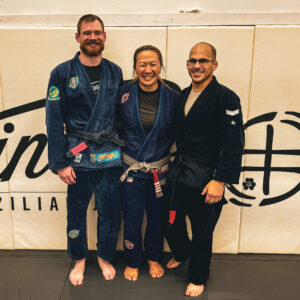 Life is cyclical. Isolation found me again years later, when many of our upper belts – my friends – left to start a school across town, founded by two of my favorite training partners. This is a natural part of the lifecycle of any martial arts school and I harbor no hard feelings about it. I just miss the people with whom I shared so much sweat and blood.
And then, out of the December cold, walked Mike Leach, who immediately tried to detach my recently healed knee from my body. As I fended off the pitbull-like attacks of this Irish/Puerto Rican leprechaun, I thought, I like this guy. And the more I’ve come to know him, the more I’ve come to like him.
Above all, Mike knows the value of a tribe, of a team. When we talk shop – which is often these days as we plot the course for the next decade of PBJJ – it’s some version of, how do we build up the room? How do we bring in more of a team feel? How do we make ourselves the ultimate tribe?
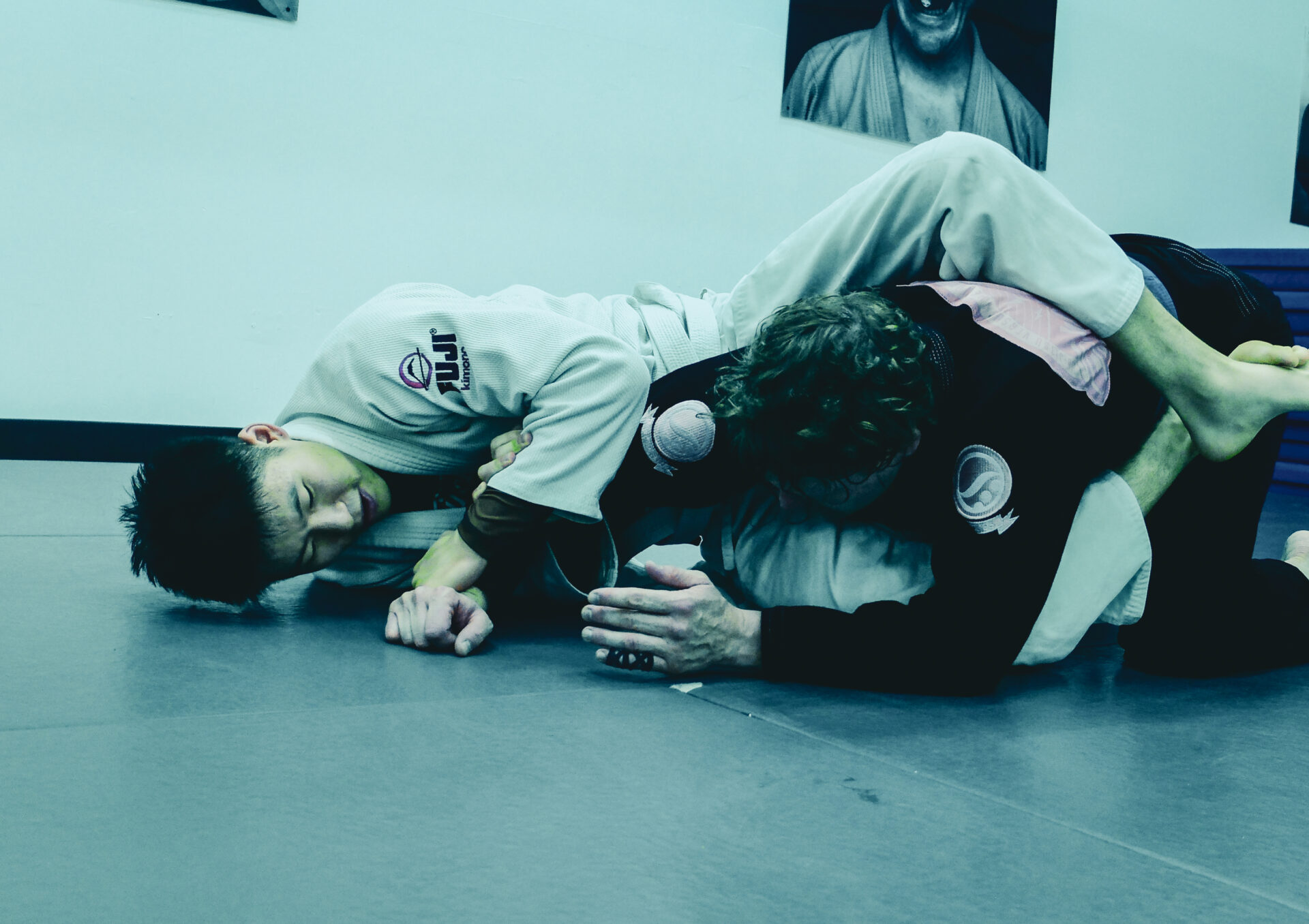
On a recent Saturday afternoon, the air was thick with sweat as we battled through three-minute shark-tank rounds — whoever held the middle earning a fresh partner with every sweep or submission. This came after forty-five minutes of standup and positional rounds hunting back attacks. Everyone was exhausted. Everyone doubted whether they could make it through – myself included. And everyone did.
This is how our tribe will be built.
One drop of sweat at a time.
Together, shoulder-to-shoulder, with each and every one of you who has decided this is where you want to be.

Joseph is a writer and journalist. You can find more of his writing at his website www.joehannan.com.