

The Architecture of Attack: Endgame First
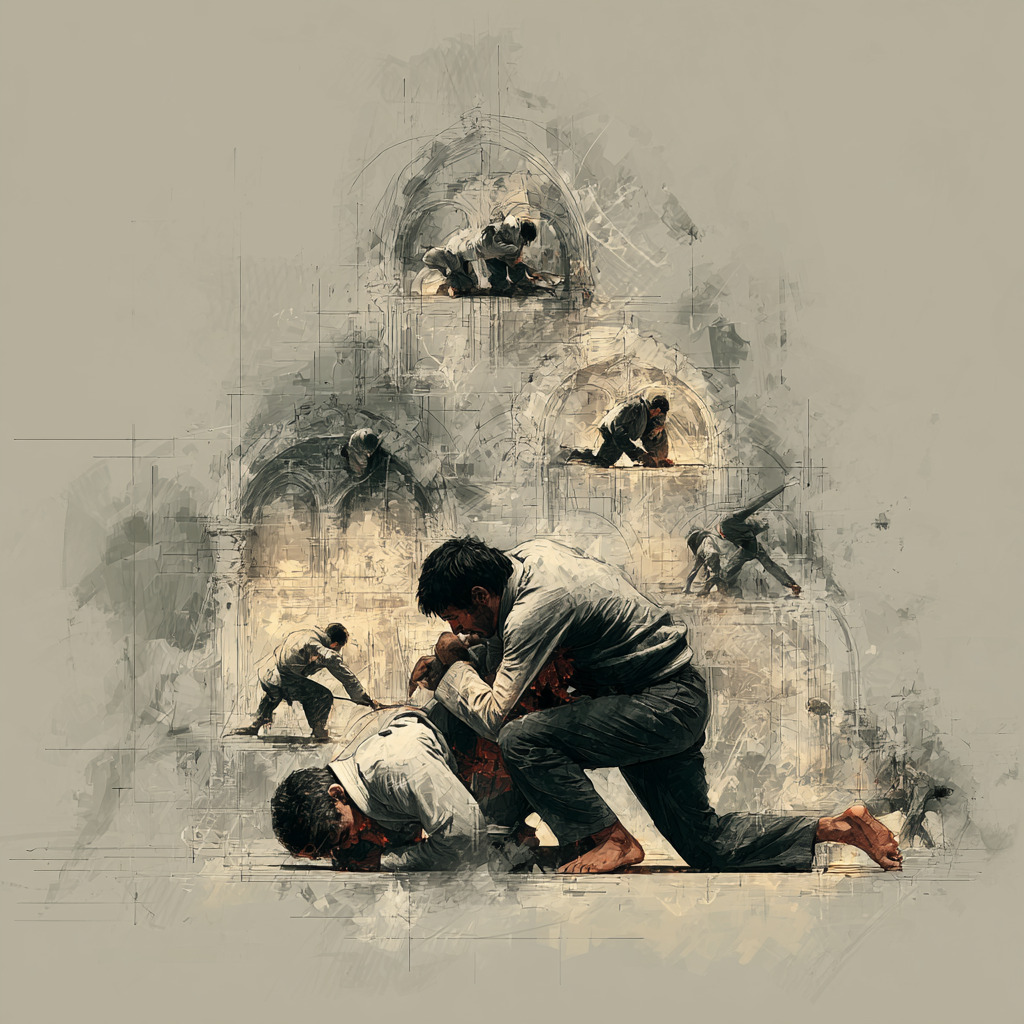
In the spirit of Barry Johnson’s Polarity Management: there are few problems in life we can solve with absolutes. Most have to be managed. BJJ gives us high-rep exposure to exactly this kind of problem. Every roll asks us to manage the tension between commitment and adaptability — between fully investing in an attack and staying loose enough to see the next one. Grapplers who get stuck are usually the ones treating their attack like a solution. The ones who stay ahead treat it like a map: they know which way they want to go, but they know there are multiple ways to get there.
Something unique to our art is that it continues to evolve, inspiring creative solutions to previously unknown problems. Part of what drives the passion for so many practitioners is the vast sea of technical information to dive into. Students can explore traditional movements and are also given the space to invent more. The downside of this freedom is that students can get lost, or fail to develop a throughline in their game.
Succeeding at “the game” is not unlike winning at any other strategic game: you learn the rules and consider the various pathways to achievement. This requires objective work, calling out the specific actions one must take to reach a desired outcome. It is not the same as doing what we do in the moment and seeing where we end up. Taking a passive or reactive posture in combat puts you one to two steps behind your opponent; to win, you first have to catch up to neutral before you even stand a chance at getting ahead.
Once operating from neutral, it’s imperative we design multiple offensive pathways toward our goal. Framing this as “Endgame first” gives us the structure: instead of leaning on multiple openings that can lead us to many places, begin by deciding which one or two high-percentage submissions you want to finish with, then walk back the various ways you get there. This organizes what you know around aligned purpose rather than a meandering one. Knowing your north star orients you when things get messy, while still allowing you to try multiple, even opposing, methods to arrive at the same place. The strength of this approach is that it lets you drive forward with dynamic force, rather than being locked in and myopic.
As students of the sport, we want to defend ourselves and execute our agenda. We increase our chances of doing both when we can see our intentions clearly by organizing a plan of attack. As we normalize winning, we adopt new agendas, internalize the old ones, and evolve our understanding of the game.